The Myth of the Right Time
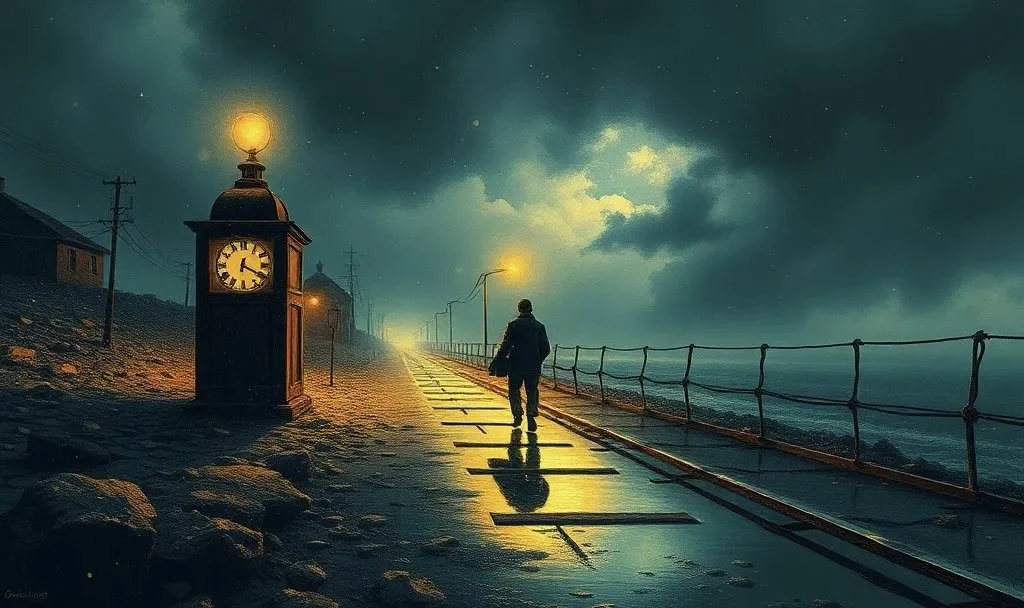
The Time is Now and that is the Only Time We Have
A writer chasing after time and then realizing the time is now
I know all about waiting for the right time that never comes. I watched years crawl by at first, then race past, while I kept telling myself the time wasn’t right. Years snowballed into decades, and I decided I didn’t know enough — or wasn’t good enough — to be a writer. Every time I wanted to write, I declared it the wrong time, convinced I’d recognize the right one by a beam from the firmament and dulcet bells ringing my name.
You won’t be surprised to learn that moment never came.
As writers, I think we spend too much time waiting for a magical moment to arrive at our doorsteps — and we miss that the magic is always right now.
Every time we tell ourselves to wait for the right time, we are telling ourselves no, in no uncertain terms.
Stop Waiting for the Muse to Clock In
We have a collective hallucination about how writing happens: a sun-drenched desk, a perfectly steaming cup of coffee, and a divine lightning bolt of inspiration that makes the words pour out effortlessly.
We call this “The Right Time.”
The problem? The Right Time is an illusion, a doorway that never opens. It doesn’t exist.
If you’re waiting for your cats to stop needing your attention, your inbox to be empty, and your brain to feel “fresh” before you sit down to write, you aren’t blocked — you’re a hostage to your own expectations.
The Productivity Trap
Our resistance loves the “Right Time” myth because it sounds like a reasonable excuse. It doesn’t feel like procrastination; it feels like preparation. We tell ourselves:
“I’ll start after I finish this one last chore.”
“I need to do more research.”
“I’m just not in the right headspace today.”
“I am not the writer I want to be, yet.”
But “headspace” is the result of the work, not the prerequisite. You don’t get in the mood and then sit down; you sit down, and eventually the mood shows up to see what you’re doing.
The Myth of the Distant Muse
We often treat inspiration as a binary event: either it’s here or it’s gone. That framework is paralyzing. When we imagine inspiration arriving fully formed from the outside, we quietly give up responsibility for generating it. We become passive recipients, waiting for a bolt of lightning to strike the keyboard. But the truth is simpler: inspiration isn’t always a grand epiphany; sometimes it’s as ordinary — and available — as the next breath, waiting for you to sit down and begin. The difference between a “block” and a breakthrough isn’t anything outside of you. The difference is in your perception of yourself and your willingness to give yourself permission to create without worry about anything else but creating in that moment.
Writing as the Engine of Inspiration
The creative process is often misunderstood as a straight line: inspiration leads to writing. In reality, writing is what generates inspiration. Putting words on the page — even terrible ones — forces your mind to engage. It’s a feedback loop: you write, you reread, and your brain starts connecting ideas you didn’t even know you had. The friction creates heat; like flint on steel, it sparks real insight. Many writers find their best ideas deep in the mess of the work, not in quiet contemplation. You reverse-engineer the process to generate your muse. You start the engine and the car moves; you don’t wait for motion before you turn the key. If you catch yourself thinking you aren’t good enough or you lack the skill, ask, “Who said that?” Don’t quit until there’s no one left to answer.
The Unromantic Duty to Deliver
The most crucial difference between an amateur and a professional is consistency. Amateurs write when they feel inspired; professionals write when they’re scheduled. Some days the well feels dry, and the temptation to walk away is loud. That’s where commitment matters: you show up for the work even when the work refuses to show up for you. Writing and meditation share the same obstacles — imposter thoughts, worries about tomorrow, the itch to do anything else. This is the unromantic duty to deliver. Even a rough mess is a foundation you can revise. You can’t polish nothing. And if you hit a wall, make the obstacle your material: put your noise, your worry, or your frustration directly onto your page.
We don’t have to change anything except our willingness to see things differently. Start treating the events in your life as gateways. Ask yourself how you can take the lawn mower next door — or that constant, chattering mantra that you aren’t ready — and use it as a doorway into meaning. Give those problems to your characters. Let the noise become texture and let the doubts become dialogue.
Believe me, I have to tell myself this over and over on an infinite loop.
The Only Time is Now
This week, I want to challenge you to disobey your self-imposed requirement for the right time. Don’t wait for an hour-long block of silence. Find a “Wrong Time” — ten minutes while the pasta boils, or the gap between meetings — and write three sentences.
The Muse is a fickle employee. Stop waiting for them to clock in. Start working, and they will eventually show up and make bland colors bright.
The Next Time You Write
After your ten-minute mini-sprint, the next time you write, notice the moment doubt appears — the familiar whisper that “this isn’t the right time.” When it shows up, tell it to go away. Make right ‘now is the right time’ your mantra. Make ‘right now is the right time’ your mission statement. You may not believe it at first, and that’s OK. Keep saying it, and keep writing. And while you’re at it, don’t judge your writing. Don’t judge the time you spent, your word count, or the perceived quality of the draft. None of that matters. What matters is that you wrote. You wrote right now — and right now isn’t just the right time. It’s the best and the only time you have to write.